TikTok Shop: 520 direct orders in 30 days
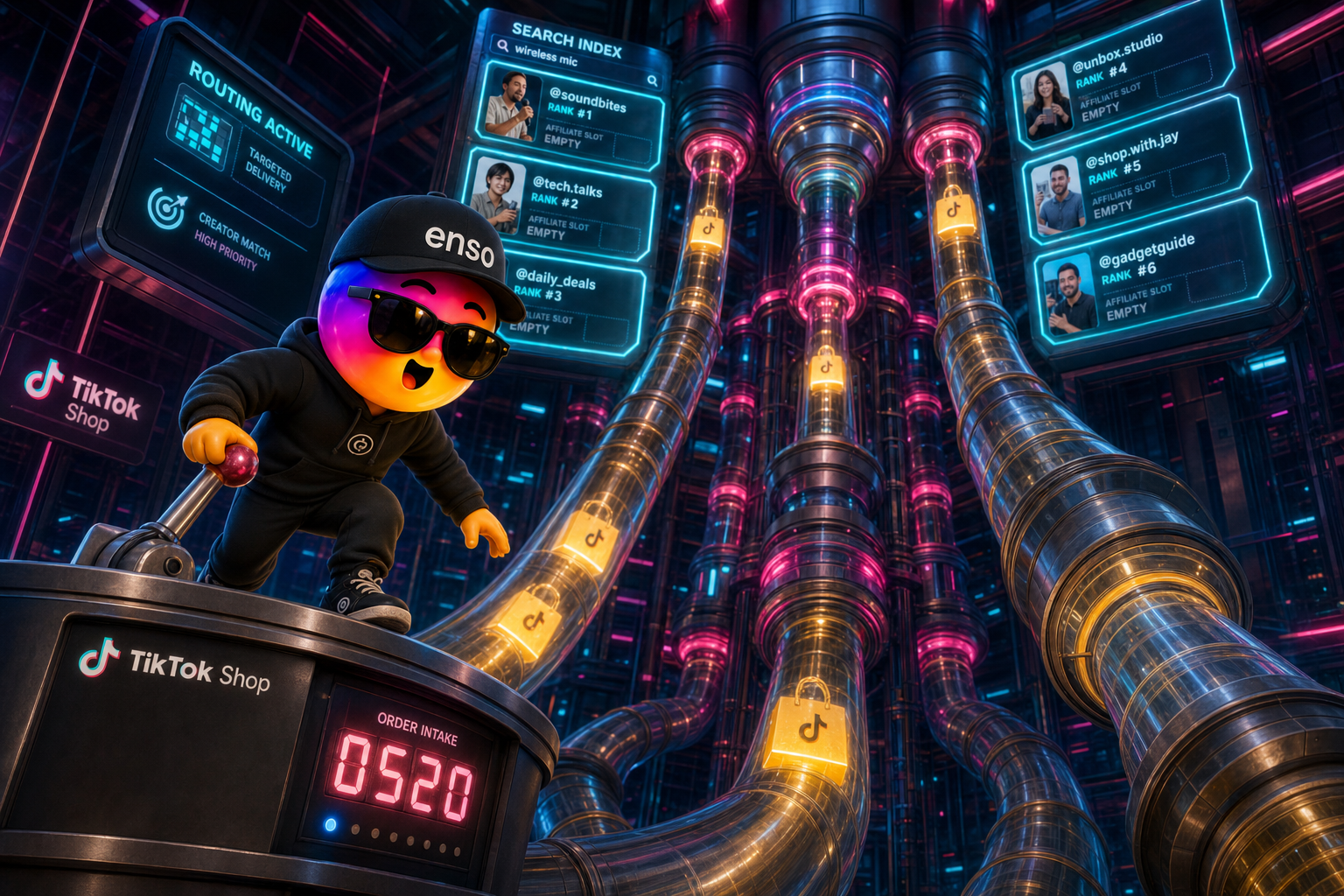
We noticed an unmonitored seam in TikTok Shop where search-indexed micro-creators answered product questions without linked catalog items. By routing targeted samples through open affiliate collaborations to creators who already held top search rankings, we captured 520 direct orders in 30 days.
- StatusTested
- SurfaceTikTok Shop
- CategoryDemand capture
- Metric520 orders direct shop orders
- ICPConsumer
High-intent buyer traffic on TikTok was pooling around search-ranked micro-creators who lacked tagged shop inventory, leaving commercial intent uncaptured at the exact point of search discovery.
Scraped top search results across twenty high-intent consumer problem queries on TikTok.
Filtered for micro-creators with under ten thousand followers who held top-three search ranking spots without linked products.
Dispatched targeted sample requests directly inside TikTok Shop Affiliate Seller Center offering an eighteen percent commission.
Supplied creators with specific comment reply guidance showing how to tag our catalog item directly into their existing search hits.
Tracked daily SKU conversions and automated re-stock alerts for creators generating repeatable daily checkouts.
- For You feed
- Search indexed
Across 30 days, 34 of the 85 contacted creators accepted our sample invites and attached our product tags to their search-ranking videos. The pilot delivered 520 verified purchases at a 4.1 percent click-to-order rate without paid ad spend. Accounts with broad lifestyle focus failed to convert, confirming that search positioning was the sole driver of transaction volume.
The castle and the crack we found
TikTok designed TikTok Shop as a closed castle. The platform incentivized merchants to pour ad spend into feed placements, spark ads, and expensive mega-creator partnerships. In return, the algorithm promised distribution on the For You page, where attention is volatile and retention is measured in fractions of a second. Most brands accepted this premise and competed for brief viral spikes that quickly crashed to zero.
While monitoring the platform's search interface, we found a glowing crack in the masonry. TikTok had quietly expanded its search engine to match Google for commercial intent. Millions of consumers were typing specific problem-led queries into the search bar, looking for physical products to solve immediate domestic frustrations. The results page was not dominated by brand accounts or mega-influencers. It was dominated by micro-creators who had published casual reviews months prior. These creators owned durable, compounding search positions, yet their videos led to dead ends because their TikTok Shop showcases were completely empty.
What we noticed in creator showcases
Attention was leaking out of the walls in the comment sections of these search-ranked videos. Viewers routinely asked where to buy the featured items, what model was shown, and whether an alternative existed. The creators rarely replied with direct links because setting up formal brand sponsorships was too slow or inaccessible for accounts under five thousand followers.
At the same time, TikTok Shop's Affiliate Seller Center contained a tool called targeted collaborations. The platform allowed brands to send direct sample invitations and pre-negotiated commission terms directly to creator inboxes, bypassing agency gatekeepers. We noticed that if a creator accepted a sample and added the SKU to their showcase, TikTok permitted them to anchor the product link directly into video comment replies and retrofit existing videos with shoppable tags. The commercial intent was already concentrated at the top of search; all that was missing was an active checkout gateway.
The mechanic step by step as we ran it
We began by mapping out twenty high-intent search phrases centered on ergonomic home workspace items. We manually audited the top five video results for each query, ignoring accounts with over twenty thousand followers. We filtered for micro-creators whose videos were at least thirty days old but still held top-three search placement for queries like compact cable organizer and standing desk wire management.
Once we compiled a target index of 85 micro-creators, we accessed the TikTok Shop Affiliate portal. Rather than posting open collaboration listings that attracted low-intent freebie accounts, we generated individual targeted collaboration invites for our cable management spine and channel kit. We set the affiliate commission at eighteen percent, roughly six points above the category average, and included a brief message that referenced the specific search video they had published.
Our communication avoided demands for new dedicated video production. Instead, we informed the creators that if they accepted the free sample, they could instantly tag the product in their existing search-ranked video and pin the product checkout card inside their comments. The friction was near zero. The creators received free physical inventory and an immediate monetization channel for views they were already generating daily.
Within fourteen days, 34 creators accepted the invitation and verified their delivery. We tracked their product anchor placements and monitored incoming order volume directly through the TikTok Shop merchant dashboard.
What happened during the thirty-day run
Over the thirty-day test window, the 34 active creators drove 520 direct orders through their embedded product anchors and showcase tabs. This generated $18,720 in gross sales with zero paid advertising spend.
The conversion data revealed that 71 percent of all completed checkouts came from videos that had been published more than sixty days prior to our sample delivery. These posts received almost no impressions from the algorithmic For You feed; their traffic arrived almost entirely through search discovery. Viewers encountered the video while actively looking for an answer, saw the creator's pinned comment with the product tag, and tapped through directly to the TikTok Shop native checkout screen.
The average conversion rate from product card impression to purchase was 4.1 percent. This was nearly double our historical conversion rate from standard feed ads. Because the product tag operated natively inside the app, buyer information and payment details were pre-loaded, reducing cart abandonment.
How we measured it
We tracked all performance metrics inside the TikTok Shop Affiliate analytics tab. We separated incoming traffic into three distinct buckets: showcase profile views, video anchor link clicks, and comment card taps. Comment card taps delivered the highest purchase intent, accounting for 312 of the 520 total orders.
We also calculated our net acquisition cost per customer. The only expenses incurred were the landed cost of the 34 dispatched sample kits and the eighteen percent affiliate commission paid on successful deliveries. Factoring in manufacturing, shipping, and commission payouts, our blended customer acquisition cost settled at $8.15 against an average order value of $36.00. This yielded an immediate cash-positive margin on day one without attribution lag.
Where the mechanic broke down
Not every creator tier responded to the mechanic. We attempted to expand the play by sending identical invitations to fifteen lifestyle creators who had larger followings between twenty thousand and fifty thousand followers. Six of them accepted samples, but their search visibility was negligible. Their views were driven entirely by temporary feed recommendations, which decayed within forty-eight hours of posting. Those six accounts produced only fourteen total orders combined.
We also ran into friction with creator compliance around product tagging. Four creators accepted the physical sample kit but failed to attach the product anchor to their older search videos, assuming TikTok required an entirely new upload. This required us to send manual follow-up messages with screenshot walkthroughs showing how to link inventory to legacy content. Once the manual guidance was delivered, three of the four successfully attached the tags.
What we are running next
We are now expanding this search-seeding play to fifty problem-specific kitchen utility queries on TikTok Shop, testing tiered twenty-two percent commission structures for creators holding the absolute number one search spot.