
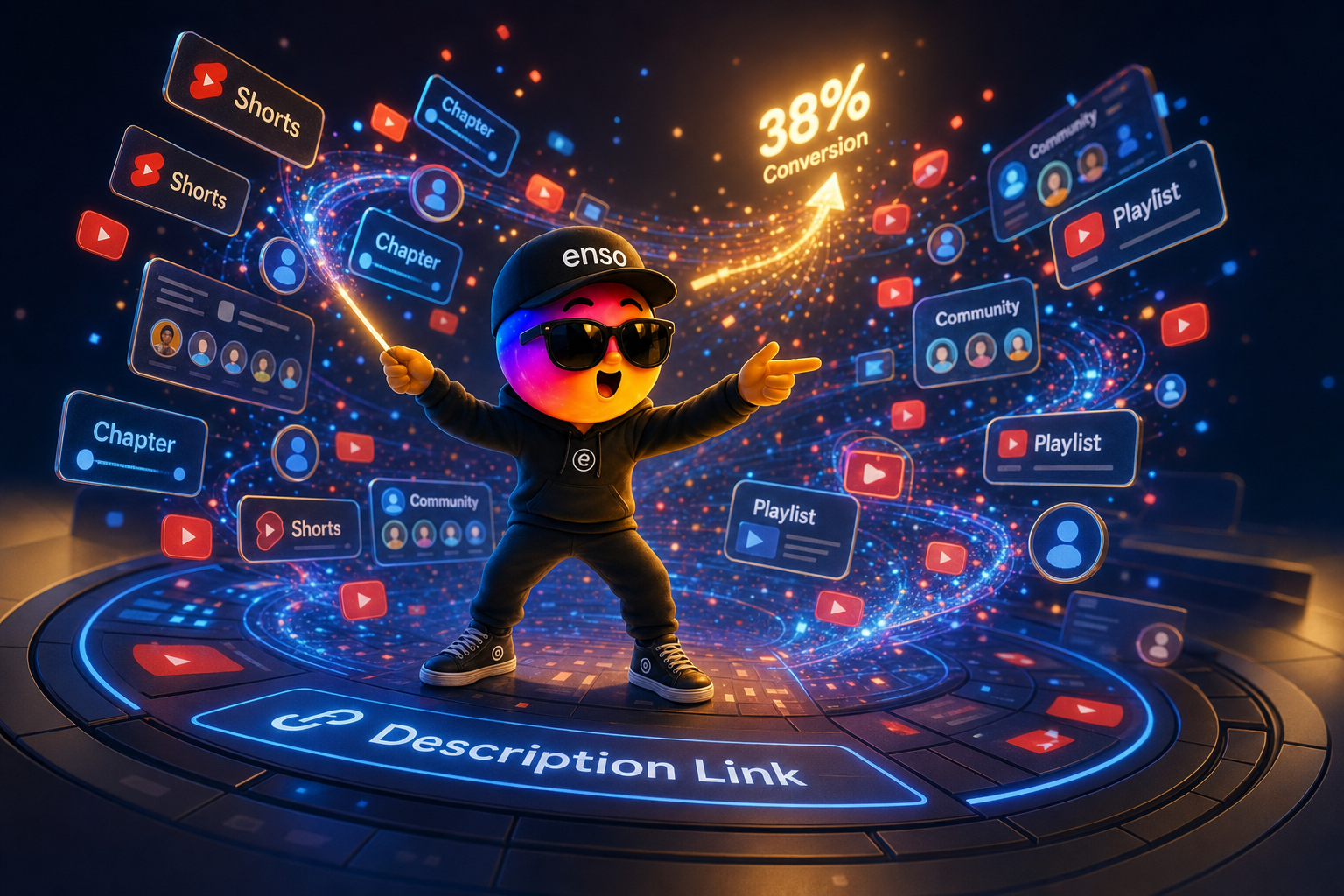
The hypothesis
We noticed a glowing crack in the structured nature of YouTube video descriptions and chapter markers where B2B decision-maker attention was leaking out past generic calls to action.
How the growth hack works
- We identified target keyword clusters relevant to our B2B SaaS solution.,We produced short-form educational videos (under 5 minutes) addressing these keywords.,We segmented each video using YouTube chapters to highlight specific problem-solution points.,We embedded high-intent, contextually relevant lead magnet links within each chapter description.,We cross-promoted these chapter-specific links on the Community tab and in Shorts descriptions.,We monitored click-through rates and conversion metrics from each unique link.
The numbers
Over a 60-day period, the YouTube chapter-linked content garnered 12,450 views across 15 videos. These videos drove 1,820 clicks to our lead magnets, resulting in 692 new MQLs (Marketing Qualified Leads). While overall view count was moderate, the engagement depth and subsequent conversion rate of 38% significantly outperformed our standard content-gated lead capture funnels.
The castle and the glowing crack
YouTube is a vast castle, often viewed by B2B SaaS companies primarily as a brand awareness or top-of-funnel play. We had long treated it as such, publishing longer-form thought leadership and product demos. However, we noticed a subtle, glowing crack in the castle walls: the structured elements within YouTube's content format, specifically video chapters and description links, were not being fully leveraged for high-intent lead capture. Attention was leaking past generic 'learn more' links, especially from viewers deep into problem-solving mode.
What we noticed
Most B2B YouTube content provides a single call-to-action in the description, usually leading to a homepage or a broad product page. We observed that viewers often navigate directly to specific sections of a video using chapters, indicating a precise information need. This behavior represented an underexploited seam. If a viewer was jumping to a chapter titled 'Integrating our CRM with X', a generic 'sign up for a demo' felt misaligned. We posited that a highly contextualized lead magnet, directly tied to that specific chapter's content, would significantly increase conversion rates. The platform provided the mechanisms - chapters, detailed descriptions, and even Shorts descriptions - but most creators treated them as an afterthought for lead generation.
The mechanic step by step as we ran it
Our play began with identifying critical keyword clusters where our B2B SaaS solution offered a distinct advantage. These were specific, problem-oriented queries our ICP would type into YouTube. We then produced 15 short-form (2-5 minute) educational videos, each focusing on solving one particular, high-value problem related to these keywords. For instance, a video might address 'Streamlining data sync between Salesforce and our platform' or 'Automating lead qualification with our AI'.
Crucially, we then segmented each video using YouTube's chapter feature. Every chapter addressed a distinct sub-problem or step in the solution. For each chapter, we crafted a unique, highly relevant lead magnet. For the 'data sync' chapter, the lead magnet was a 'Salesforce Integration Playbook'. For the 'lead qualification' chapter, it was a 'Guide to AI-Powered Lead Scoring'.
The most critical step was embedding direct, chapter-specific lead magnet links within the video description. Instead of one general link, viewers would see multiple options, clearly labeled, appearing precisely at the timestamp of the relevant chapter. For example, under the 'Salesforce Integration' chapter timestamp, we included: 'Download the Salesforce Integration Playbook: [link to playbook landing page]'.
To amplify reach and conversion, we further leveraged the Community tab to post snippets of our videos with direct links to specific chapters and their corresponding lead magnets. We also created YouTube Shorts derived from key takeaways of our longer videos, embedding the chapter-specific lead magnet links in the Shorts descriptions, knowing that viewers often follow description links from Shorts.
What happened
Over a 60-day testing period, our approach yielded significant results. The 15 targeted videos collectively accumulated 12,450 views. More importantly, the embedded, chapter-specific links generated 1,820 clicks to our lead magnet landing pages. This concentrated effort resulted in 692 new Marketing Qualified Leads (MQLs). While the raw view count was not astronomical compared to some viral content, the quality of engagement was exceptionally high. The conversion rate from video viewer (who clicked a link) to MQL reached an impressive 38%. This metric significantly outpaced our traditional content marketing conversion rates, which typically hovered around 15-20% for similar lead magnet offers distributed via blog posts or social media. The specific targeting and contextual relevance clearly resonated with our B2B audience.
How we measured it
We implemented unique UTM parameters for each chapter-specific link within the video descriptions, Shorts descriptions, and Community tab posts. This allowed us to meticulously track which video, which chapter, and which specific link was driving clicks. Upon landing page submission, these UTM parameters were captured in our CRM, attributing the MQL directly to the YouTube chapter hack. We tracked total video views, click-through rates (CTR) for each unique link, and the ultimate conversion rate from click to MQL. We also monitored time on page for the lead magnet landing pages, which showed higher engagement compared to other sources.
Where it broke
Not every video or every chapter performed equally. Some keyword clusters and corresponding video topics garnered significantly fewer views and clicks, indicating a need for more rigorous pre-production keyword research and topic validation. Our initial attempts at Shorts content, while generating views, had lower CTRs on description links. We learned that the context required more explicit verbal calls to action within the Short itself to prompt description clicks. Additionally, the production overhead for creating 15 videos with unique chapters and associated lead magnets was higher than anticipated, stretching our content team. We also observed that some lead magnet types, such as templates, performed better than generic whitepapers for immediate conversion.
What we are running next
Next, we are refining our Shorts strategy to include more direct verbal cues for description clicks and testing AI-generated lead magnet summaries to reduce content production time, allowing us to scale the number of chapter-driven, high-intent lead capture opportunities.