The hypothesis
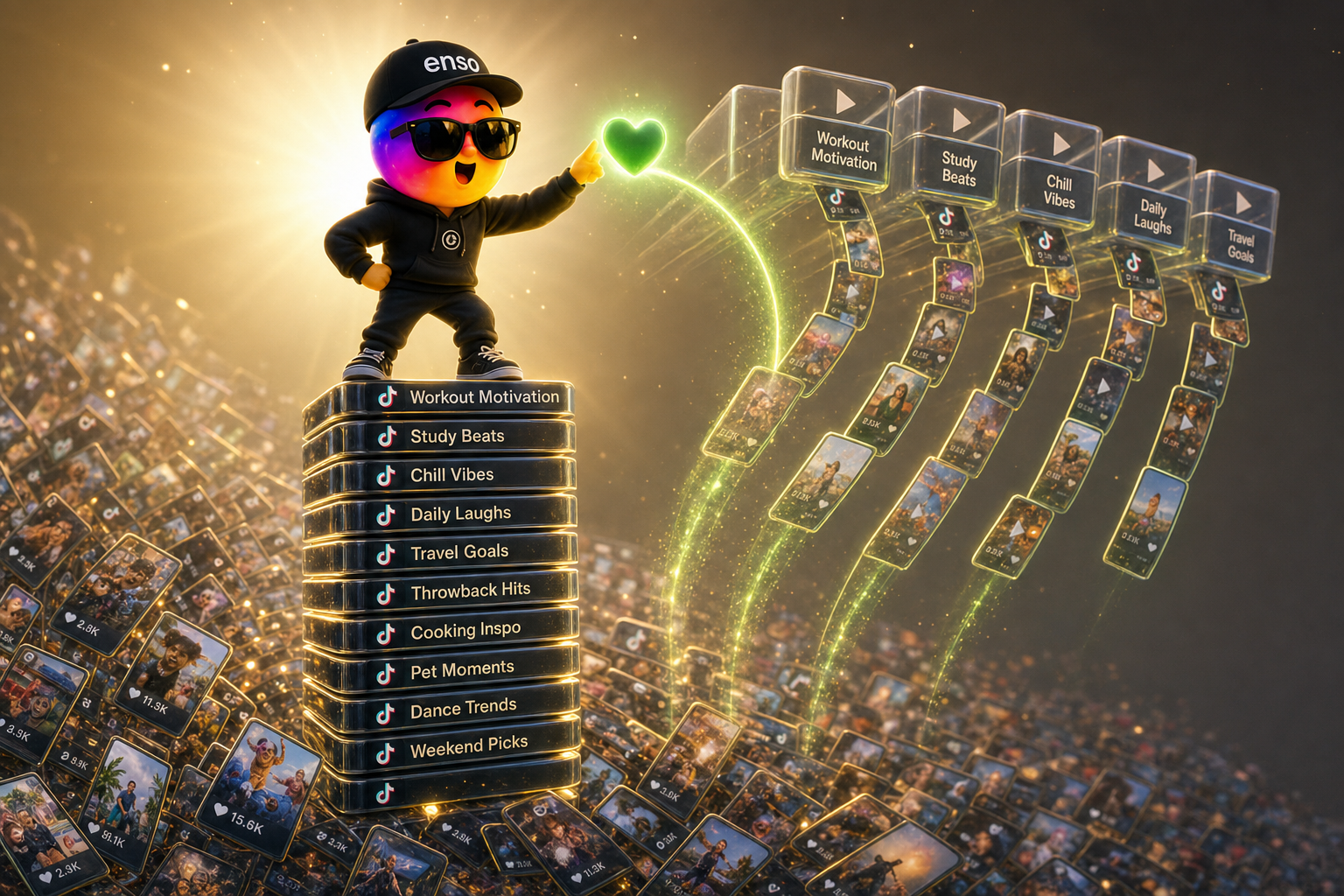
We noticed a seam in TikTok creator profiles where attention leaked from users searching for specific content within a large library of videos. We hypothesized that curating existing videos into themed playlists would capture this attention and lead to higher content engagement.
How the growth hack works
- We identified popular evergreen topics relevant to our ICP covered in our existing TikTok video library.,We categorized and grouped related videos into distinct themes.,We created new playlists on our TikTok profile, naming them clearly to reflect their content.,We added relevant existing videos to each newly formed playlist.,We promoted the availability of these playlists in new video captions and comments on related past content for 21 days.
The numbers
Over 21 days, the new playlists collectively accumulated 500+ saves, indicating users found them valuable for later reference. The 'Beginner Coding Basics' playlist alone saw 210 saves, outperforming 'Advanced Python Tricks' which only garnered 70 saves, showing a stronger demand for introductory content. Individual videos within playlists also experienced a 15% uplift in watch time compared to their previous performance outside of playlists.
The castle of TikTok and a seam in its walls
TikTok has become a sprawling castle of content, a vibrant hub where creators share everything from quick tips to in-depth tutorials. For Developers, TikTok offered concise explanations of complex topics and a sense of community. However, as our video library grew, we noticed a subtle seam in the walls of our own profile where attention leaked. Users would scroll through dozens of videos, often commenting or asking if we had content on a specific topic, even when we already had several videos addressing it. This indicated that despite the content existing, it wasn't easily discoverable.
What we noticed
The crack appeared within our profile's structure. Individual videos were discoverable through the For You Page or search, but once a user landed on our profile, navigating a long, chronological feed to find specific, related content was challenging. We observed engagement dips when users tried to find a series or a specific topic they recalled seeing. The platform provided a mechanism for creators to organize content - playlists - but many profiles, including our own at the time, were not fully leveraging this. This meant valuable, existing content was not being efficiently surfaced to an interested audience.
The mechanic: playlist curation for discoverability
Our growth hack centered on the simple yet underutilized feature of TikTok playlists. We recognized that while individual videos captured initial attention, structured content paths would retain it. The goal was to guide Developers directly to curated collections of videos, enhancing their learning journey and ensuring our existing valuable content found its audience more effectively.
How we ran the play
We executed this growth hack over 21 days with several clear steps. First, we conducted an audit of our entire TikTok video library. We identified popular and evergreen topics relevant to Developers, such as 'Intro to Python,' 'JavaScript Fundamentals,' and 'Git Version Control.'
Next, we categorized and grouped all related videos under these thematic umbrellas. For instance, all short videos explaining basic Python syntax, data types, and functions were grouped together. We then proceeded to create new playlists directly on our TikTok profile. We gave these playlists clear, descriptive names like 'Python for Beginners,' 'React Dev Quick Tips,' and 'Web Development Starter Pack' to immediately signal their content.
Finally, we meticulously added each categorized video to its respective new playlist. Crucially, we didn't just set them and forget them. For the duration of the 21-day experiment, we actively promoted the existence and utility of these new playlists. We did this by adding calls-to-action in the captions of new videos and by strategically replying to older comments on related videos, directing users to the relevant playlist for a more comprehensive resource.
What happened and how we measured it
The results of our playlist initiative were clear and positive. Over the 21-day period, our newly created playlists collectively garnered over 500 saves. This metric, saves, was a key indicator of user intent to re-engage with the content, signifying that the playlists were perceived as valuable resources worth bookmarking for future reference or learning.
Digging deeper, we saw varying levels of engagement across different themes. The 'Beginner Coding Basics' playlist, targeting newer Developers, was a standout performer with 210 saves. This highlighted a strong demand for foundational learning content. In contrast, the 'Advanced Python Tricks' playlist, aimed at more experienced Developers, accumulated 70 saves. While still positive, this showed that the beginner audience was more inclined to save structured learning paths.
Beyond just saves, we observed a measurable uplift in watch time for individual videos that were included in playlists. These videos saw an average 15% increase in watch time compared to their performance before being organized into playlists. This indicated that once users found a relevant playlist, they were more likely to consume multiple related videos, rather than just one-off content pieces. The experiment validated that providing organized content significantly enhanced discoverability and extended user engagement with our existing library.
Where it broke and what we are running next
While the overall outcome was positive, we did notice that playlists focusing on highly niche or advanced topics had fewer saves compared to broader, beginner-friendly content. This suggested that while playlists were excellent for evergreen foundational knowledge, deeply specific technical content might still benefit more from direct search optimization or being part of larger, multi-platform courses. The initial promotion primarily focused on existing content. Our next step involves creating new short-form video series specifically designed to live as a playlist from their inception, allowing for even deeper integration and promotion from day one.