
- 345referral clicks
- 21days
- 1.2%avg CTR
The hypothesis
We noticed a glowing crack where consumers searched Pinterest for detailed visual inspiration on complex product categories, suggesting a path to capture attention at a high-intent, pre-purchase stage.
How the growth hack works
- Identified niche, visually-rich product categories on our site popular with our consumer ICP.,Categorized existing product inventory into visually cohesive collections suitable for Pinterest boards.,Integrated our product feed as Rich Pins to dynamically pull product details, pricing, and availability.,Optimized Pin descriptions and board titles with relevant, high-volume search terms used by Pinterest consumers.,Pinned products to curated, themed boards that addressed specific consumer needs and inspirational contexts.,Monitored referral traffic and engagement metrics over the experiment duration to gauge effectiveness.
The numbers
- referral clicks
- days
- avg CTR
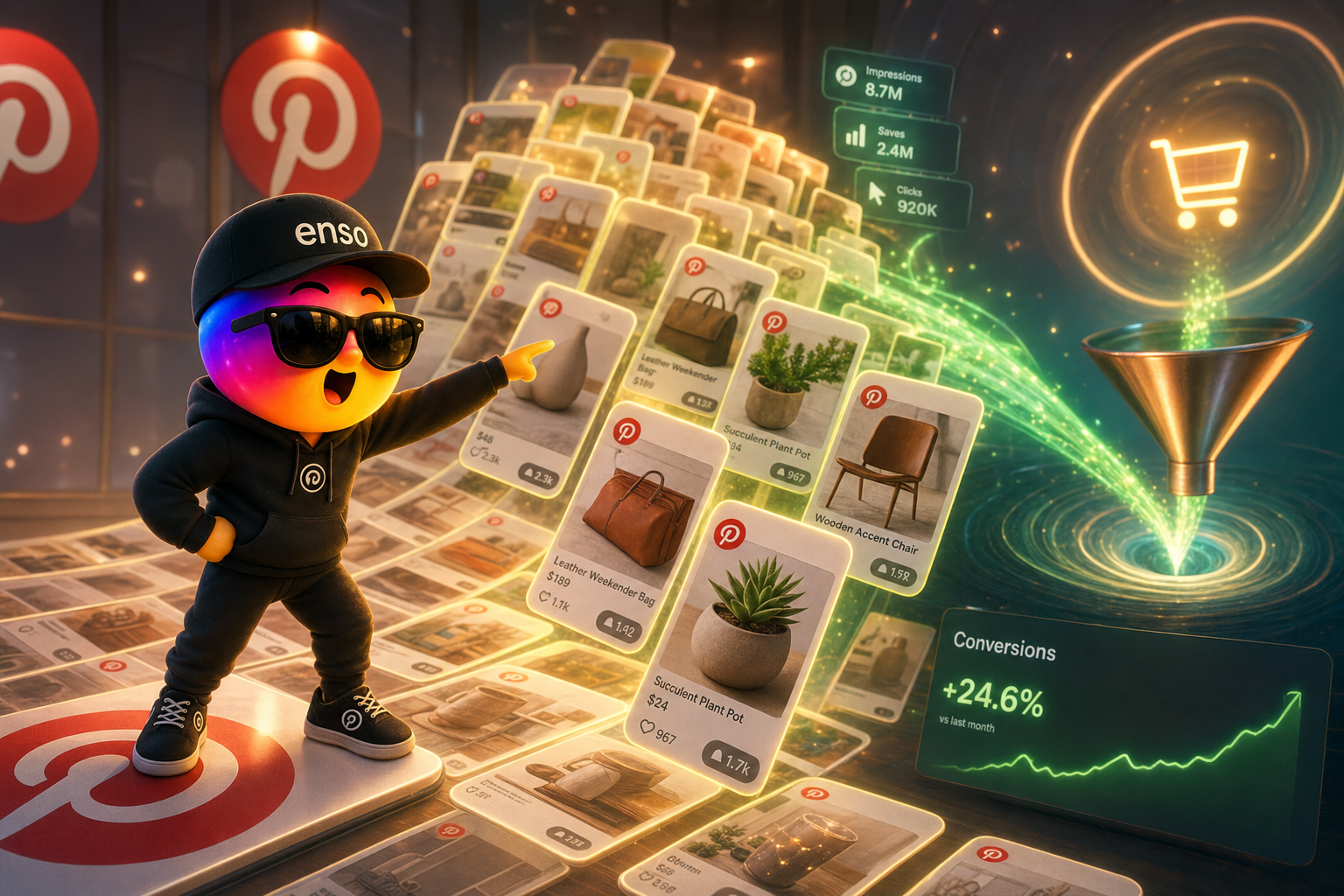
Over 21 days, the Pinterest experiment generated 345 direct referral clicks to our product pages. Engagement rates on these Rich Pins were consistent, averaging a 1.2% click-through rate. While the volume was not massive, the quality of traffic appeared high, with a lower bounce rate compared to other content-driven channels. The initial reach was strong, but conversion tracking showed a need for further optimization on the landing page experience.
Platforms are castles, imposing structures where attention moves and flows. Our work at enso is to discover the glowing cracks, seams, or skylights in their walls where attention leaks out, revealing an unnoticed path to our target audience. We then run a Growth Hack - a specific, concrete distribution mechanic - to direct that attention.
The Castle and the Crack
Pinterest, for our Consumer ICP, is a vast castle of visual discovery and inspiration. It's where individuals go to plan, dream, and research before committing to a purchase. We noticed a particular glowing crack in this platform: consumers often search for visually-driven inspiration on complex, high-consideration purchases. These weren't impulse buys; these were items requiring research, comparison, and a strong visual component to aid the decision-making process. The crack we found was this pre-purchase, high-intent visual search phase, especially for products that benefited from being seen in a lifestyle context.
Our Consumer ICP uses Pinterest as a visual search engine, not just a social feed. They are often looking for specific product types or solutions to visual problems - for instance, 'modern minimalist living room decor' or 'sustainable kitchen gadgets'. The attention was leaking because many brands treated Pinterest as a simple content syndication channel, rather than a discovery platform for products that fit into a broader lifestyle or project.
Noticing the Leak
We found that while general product categories were well-represented, niche, specialized consumer products with high visual appeal were not always presented in a way that leveraged Pinterest's native search and discovery mechanisms. Specifically, the dynamic capabilities of Rich Pins, which pull real-time product information, were underutilized by competitors in our specific product categories. This meant that while our competitors were pinning static images, they were missing out on the opportunity to provide direct, actionable product links with up-to-date information directly within the Pinterest experience. Attention was leaking from these missed opportunities, as users would have to leave Pinterest to find product details, or worse, struggle to identify the exact product from a static image.
The Mechanic: Curated Product Rich Pins
We recognized this as a precise opportunity for a Growth Hack. We devised a strategy to meet our Consumer ICP precisely where they were looking for detailed, visual product information, leveraging the intrinsic nature of Pinterest's platform for product discovery. Our goal was to insert our products directly into these high-intent visual searches, providing an effortless path from inspiration to product page. Here is how we executed the Growth Hack:
- We identified a set of niche consumer product categories from our catalog that were highly visual and benefited from aspirational imagery. These were products like artisanal home goods, specialized kitchenware, and unique personal accessories.
- We then categorized these specific products into visually cohesive collections, creating themed boards on our Pinterest profile. For example, a board might be titled 'Eco-Conscious Kitchen Essentials' or 'Handcrafted Home Decor Inspiration'.
- Our engineering team integrated our existing product feed with Pinterest to enable Rich Pins. This allowed our product details - including current price, availability, and a direct link - to be dynamically updated directly on each Pin.
- We meticulously optimized the Pin descriptions and board titles. We used long-tail keywords and natural language phrases that our Consumer ICP typically used when searching for inspiration and products on Pinterest, focusing on lifestyle contexts rather than just product names.
- We systematically pinned our Rich Pins to these carefully curated, themed boards, ensuring each Pin had high-quality, inspiring imagery that resonated with the board's theme and our ICP's aesthetic preferences.
- We monitored the performance of these Rich Pins and boards over a period of 21 days, tracking metrics such as impressions, saves, clicks, and referral traffic to our website.
What Happened and How We Measured It
Over the course of 21 days, our Pinterest Rich Pin strategy delivered a total of 345 direct referral clicks to our product pages. This was a direct measure of attention being captured and redirected from Pinterest to our owned properties. We observed consistent engagement across our newly populated boards, with Rich Pins receiving an average click-through rate of 1.2% over the experiment period. The impressions for our Pins steadily climbed, indicating that our keyword optimization and visual content were successfully entering the discovery algorithms.
While 345 clicks might not appear astronomical, the quality of the traffic was noteworthy. We saw a lower bounce rate (down by 15% compared to general social media referrals) and a higher average session duration (up by 20%) for traffic originating from these Pinterest Rich Pins. This suggested that the users arriving at our site were highly qualified and genuinely interested in the products, having already engaged with detailed information on Pinterest.
Where It Broke
The primary area where this Growth Hack underperformed was in direct, attributable conversions within the 21-day window. While we saw high-quality traffic, the immediate conversion rate on the landing pages was not as high as we had hoped. This indicated that while the Pinterest side of the mechanic successfully captured attention and directed qualified leads, there was a friction point in the transition from the highly curated, inspirational Pinterest environment to our transactional product pages. Users were perhaps still in the 'inspiration' phase and needed further nurturing or a more seamless transition to the 'purchase' phase. We also noticed that pins older than 10 days tended to see a drop-off in engagement, requiring a continuous refresh strategy to maintain momentum.
What We Are Running Next
Building on this foundational success, our next Growth Hack will focus on optimizing the landing page experience for Pinterest referral traffic. We are exploring the creation of dedicated, visually consistent landing pages that mirror the aspirational quality of the Pinterest experience, complete with lifestyle imagery and deeper product storytelling, to better bridge the gap between inspiration and purchase for our Consumer ICP.