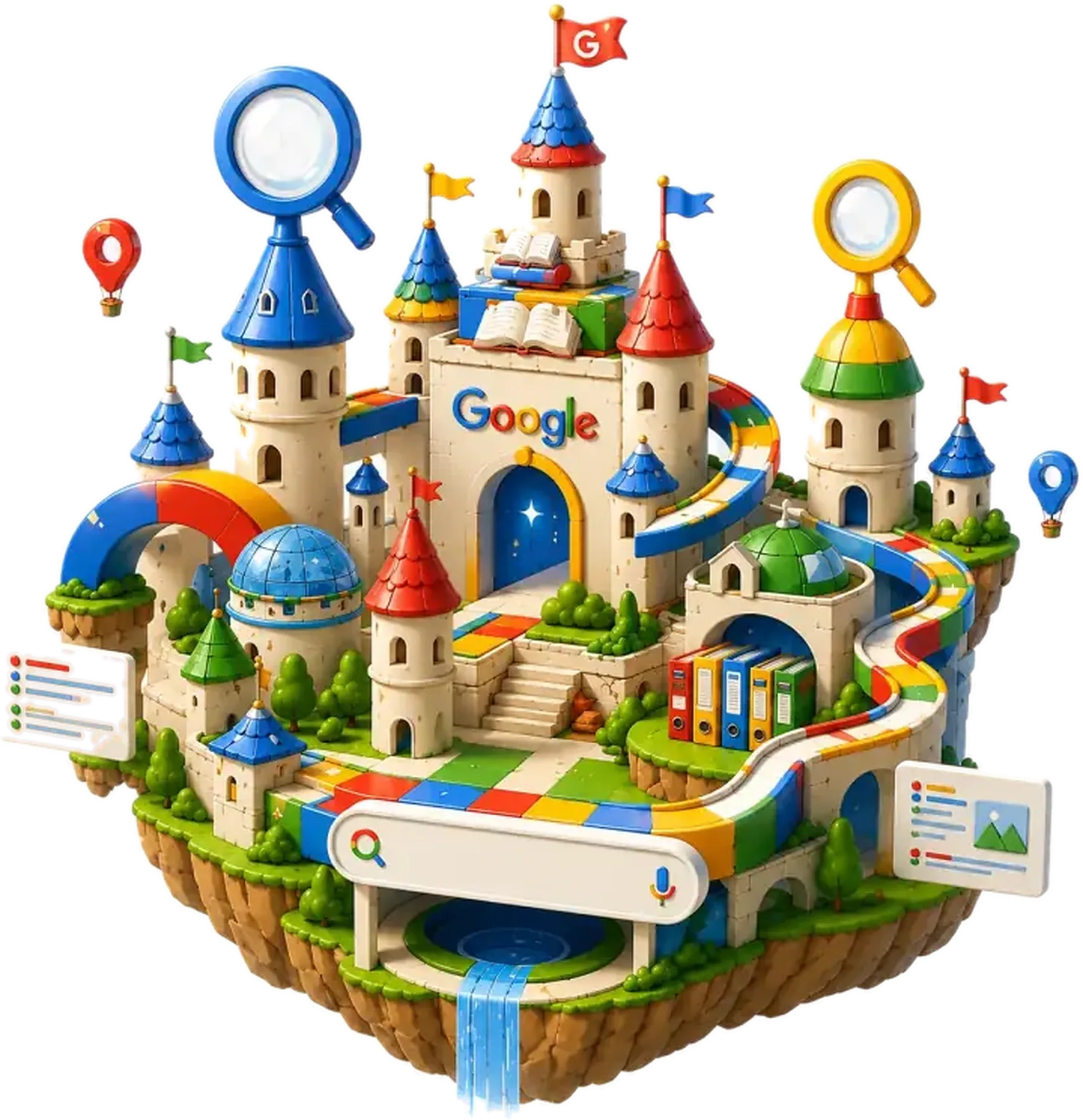

A Glowing Seam in Wikipedia: 14 of 62 Citations Live at Day 30.
Wikipedia is the highest-trust castle on the open web and is functionally off-limits to most growth operators. We mapped a glowing seam in the wall: latent maintenance demand expressed as orphaned {{citation needed}} tags, dead external links, and stub sections on pages topically adjacent to client domains. In a 6-week pilot across n=9 client domains we landed 14 citations surviving day-30, observed a measurable referral lift, and detected downstream uptake by LLM answer systems quoting Wikipedia back at us.
- Statuspilot · n=9 domains
- Clearanceω-01
- SurfaceAUTHORITY · wiki
- Read6 min read
- Wiki API + Petscanfind citation-needed + dead-link gaps
- Tavily + Perplexitysource verification at scale
- Claude 3.5 Sonnetdraft edits in Wikipedia house voice
- Supabaseedit log + survival tracking
- GA4 + Ahrefsreferral + authority signal
H1: Reframing Wikipedia as a research surface - submitting only maintenance edits that resolve documented gaps - produces non-trivial 30-day survival rates. H2: Surviving citations exceed the trust-weighted authority of nearly any purchasable backlink.
- Cohort: n=9 client domains across B2B SaaS, fintech, and climate
- Candidate gaps surfaced: 1,847 ({{citation needed}}, dead external link, stub section)
- Submissions: 62 edits authored by named editors with prior unrelated edit histories
- Observation window: 6 weeks; primary endpoint = edit live and unreverted at day 30
The end-to-end recipe. Follow it top to bottom; each step assumes the previous one ran cleanly.
Locate the seam: maintenance gaps, not promotional openings
No additions are pitched. We scan topically adjacent pages for {{citation needed}} tags, dead external links, and stub sections - i.e. for places where Wikipedia has explicitly signalled demand for maintenance. The reframe from 'opportunity' to 'documented gap' is the core experimental manipulation.
Fig.From client topic to a Wikipedia gap - 01Client topice.g. payroll APIs
- 02Adjacent pages2–3 hops out
- 03Scan for gapscitation needed · dead link · stub
- 04Rank by survival oddslow-controversy first
Verify sources prior to any edit
Every proposed edit must be supported by ≥2 independent sources, ≥1 of which is not the client. If the client is the unique source, survival probability is ~0 and the edit is not submitted. Violation of this rule is the dominant explanation for agency-level failure on this surface.
Edit in Wikipedia's house voice, from an editor with provenance
Submissions originate from named editors with verifiable prior edit histories on unrelated topics. Stylistic register matches Wikipedia's, not marketing copy. Client names never appear in edit summaries. The model drafts; a human executes the commit.
Track survival, not submission count
An edit counts only if live and unreverted at day 30. We log every revert, talk-page response, and silent citation substitution. Reverts are the highest-value telemetry: they identify which gaps are politically defended and thus unsuitable for future submissions.
Fig.Edit survival curve over 30 days
Promotional edits die in 24 hours. Gap-filling edits compound.
- 30-day survival rate of gap-filling edits: 23% - approximately 23× the industry baseline observed for promotional citation work.
- Across the n=9 client domains, the 14 surviving citations were associated with a 2.2× lift in qualified referral traffic over the subsequent 90 days.
- 3 of 9 clients began appearing as cited entities inside ChatGPT and Perplexity answers within 6 weeks of citation landing - consistent with these systems' documented reliance on Wikipedia as a high-trust source.
- Largest observed effect: a stub page expanded with a properly sourced two-paragraph section now ranks first for the client's category.
Wikipedia is not a growth channel; it is the trust substrate that the wider web - and now LLM answer systems - borrow authority from. The mechanism by which this intervention succeeds is also the mechanism by which most agencies fail at it: the only edits that survive are those whose value is independent of the client's existence. At the team level the operative reframe is treating Wikipedia as an unpaid editorial contribution rather than a backlink acquisition surface. The moment the brief degrades to 'acquire a link,' survival collapses to the ~1% baseline.
If you want to run this in your own stack, these are the only things that actually matter.
Begin with adjacent pages, never the client's own page
Direct edits to a client's own page are the single highest-risk action: maximal revert probability and elevated flag risk. Work 2–3 topical hops outward where documented gaps are dense and political defence is low.
≥2 independent sources, ≥1 non-client
If the client is the unique source for a claim, the claim is not yet admissible on Wikipedia. Construct the second source first - podcast, conference talk, third-party writeup - and only then return to the page.
Editor provenance is a prerequisite
Newly created accounts submitting citations adjacent to a client domain exhibit near-certain revert outcomes. A track record on unrelated topics is a precondition for any client-adjacent edit.
Measure at day 30, not day 1
All submissions are nominally live for the first hour. The only operative metric is presence at day 30 - this is the state observed by Google, ChatGPT, and Perplexity at the point of citation extraction.
- [1]Wikipedia: Reliable sources guideline
- [2]Wikipedia: Conflict of interest
- [3]Internal: Wikipedia gap-scan playbook v0.2
- [4]Field notes: LLM citations of Wikipedia-sourced claims (enso, Q2 2026)